

Practice has no deadline.
Pick one hand skill. Stop while it’s still useful. You’re after a relaxed grip and a routine you can repeat, not a perfect part or a style your child has to endure.
The practice ladder
Section gently
Use your fingers to split the hair into easy areas. Clean parts come after the knots are out. Clip finished sections apart.
Two-strand twists
Split a section in two and cross them around each other. Practice a relaxed base, and undoing the twist without pulling.
Three-strand plaits
Split into three. Outer strand over the middle, then the other side. Practice a light, even grip and letting go from the ends.
A broad cornrow
Add a little hair with each under-cross. On the mannequin, focus on the hand motion, not tightness. A patient stylist can check your technique on real hair.
Takedowns too
Undo the style slowly from the ends, separate shed hair, and use slip when needed. An easy style is easy to take down, not just fast to put in.
Sources AAD · Hairstyles that pull can lead to hair loss · AAD · Teaching your child healthy hair care habits
Decision map
Is this style too tight?
Check this after every install, and again the next morning.
See the whole map
Any wincing, headache, bumps or sore spots at the base?
- YesTake it down or loosen it today.Pain is the signal, not the price of a neat style. Redo it bigger and looser.Notice → act → get help
- NoQ2
Is the skin at the roots tented, shiny or pulled up?
- YesLoosen the sections that pull.Release the tightest parts first, usually the edges and nape. Next install, use fewer and larger sections.The practice ladder
- NoQ3
Do the same edges or ponytail spot take the tension every week?
- YesRotate the stress points.Move the part, change the anchor, alternate puffs with loose twists. The edges need weeks off.Low-tension finishes
- NoQ4
Did they ask to stop or say it hurts during the session?
- Yes“Pause” means pause.Hands off, then let them choose: finish later, go bigger, or call it done. Trust is the whole routine.The Thairapy ritual
- NoComfortable. Keep it.Check the hairline again tomorrow morning and take it down on schedule.Morning, night & takedown
- Yes
- Yes
- Yes
Step by step: a broad cornrow
A broad cornrow
Learn it on a mannequin first. Wide lanes, low hands, no tightness.
Practice skill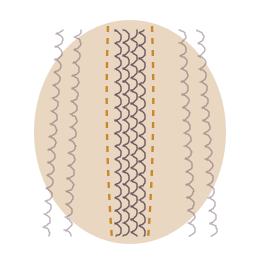
Part one wide lane
Clip the rest away. Wide lanes are easier and gentler while you’re learning.
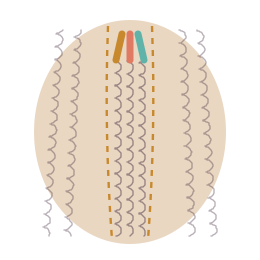
Start with three small pieces at the hairline
Take a small section at the front of the lane and split it in three.
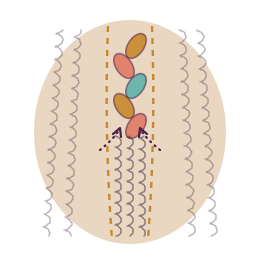
Cross under and add a little hair each time
Outer strand under the middle, then pick up a little hair from the lane before the next cross. Keep your hands low on the scalp, not pulling up.
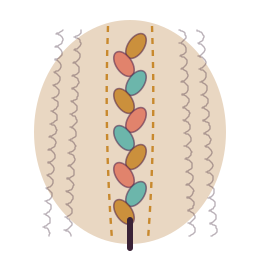
Finish as a plait
At the end of the lane, keep plaiting to the ends. Tightness is not the goal. Neat comes with practice.
Keep beads and small decorations out of the toddler routine
Bead threading and decorative techniques can stay mannequin skills. Small removable pieces aren’t safe for toddlers just because they’re soft or say “kids.” Keep small parts locked away.
Use soft, covered ties in the right size only when a style needs them. A satin scrunchie isn’t permission to pull tight, and it isn’t a sleep accessory for babies.
Sources AAD · Teaching your child healthy hair care habits · AAP · How to keep your sleeping baby safe
Before you try it on your child
Practical teaching tips, not a tested haircare method.
Keep the care connected
Supporting sources
Checked October 26, 2026. Source roles and limitations are part of these instructions.
AAD · Hairstyles that pull can lead to hair loss · Date not displayed
https://www.aad.org/public/diseases/hair-loss/causes/hairstyles
Tension and early warning signs apply across hairstyles. A professional installation does not remove traction risk.
AAD · Teaching your child healthy hair care habits · Date not displayed
https://www.aad.org/public/everyday-care/hair-scalp-care/hair/hair-care-habits
Child-focused gentle handling and swimming guidance; not a trial of this family routine.
AAP · How to keep your sleeping baby safe · Date not displayed
https://www.healthychildren.org/English/ages-stages/baby/sleep/Pages/a-parents-guide-to-safe-sleep.aspx
Infant safe sleep takes precedence over hair-preservation accessories. No birthday-based bonnet clearance is inferred.